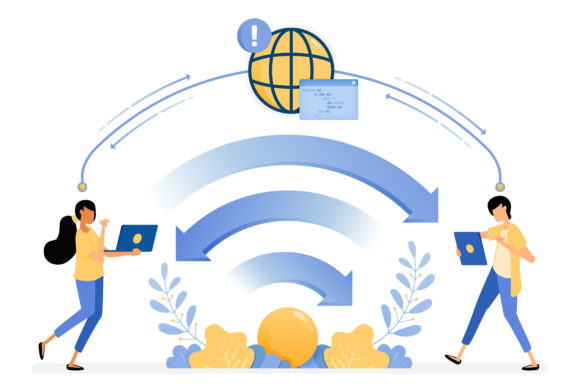
3d Banner of Wifi Internet Communication
In an era where digital connectivity is the backbone of modern business and personal interaction, visual communication plays a pivotal role in conveying complex technological concepts quickly and effectively. The 3d Banner of Wifi Internet Communication stands out as a sophisticated design asset that bridges the gap between abstract data transfer and tangible user experience. Whether you are a web developer crafting a landing page for a new ISP, a marketer designing a social media campaign for a tech startup, or an educator creating materials for digital literacy courses, understanding how to leverage high-quality vector graphics can significantly enhance your project's impact.
This specific design package is not merely a static image; it is a versatile tool intended for Banner vector design of wifi for communication technology and internet networks data transfer. It addresses the need for clarity, professionalism, and aesthetic appeal in environments where bandwidth, speed, and reliability are key selling points. However, simply downloading a graphic is only the first step. To truly benefit from this resource, one must understand its technical specifications, potential applications, and the common pitfalls associated with using 3D-rendered assets in web and print media.
Understanding the Value of 3D Vector Graphics
Why choose a 3D representation over a flat icon? The answer lies in depth and perception. A well-executed 3D banner creates a sense of immersion. For industries dealing with internet networks data transfer, such as cloud computing services, cybersecurity firms, or telecommunications providers, a 3D visual suggests stability, robustness, and advanced technology. It moves beyond the simplistic "signal bars" iconography often seen in basic UI designs, offering a more premium feel that resonates with audiences expecting high-performance solutions.
The inclusion of editable EPS 10 files in this design package is particularly noteworthy. This format ensures that the core elements—such as the wifi waves, the router structures, or the network nodes—are scalable without loss of quality. This scalability is crucial because a design might need to look pristine on a tiny mobile app notification badge just as much as it does on a massive outdoor billboard. By providing both editable vectors and high-resolution JPEGs, the package caters to both creative professionals who need to tweak colors and layouts, and general users who require immediate, ready-to-use assets.
Common Mistakes in Using 3D Web Assets
While the availability of stunning 3D graphics is beneficial, misuse can lead to poor user experiences and increased development costs. One frequent error is ignoring file optimization. A high-resolution JPEG or a complex EPS file can be heavy. If you upload these directly to a website without compression or proper formatting, you risk slowing down page load times. In the context of Wifi Internet Communication, irony abounds: a site promoting fast internet that loads slowly will undermine its own message. Always convert heavy vectors to SVG for web use where possible, or compress JPEGs appropriately for banners.
Another common oversight is failing to consider color adaptability. Many designers download a 3D banner and use it exactly as provided, regardless of their brand’s color palette. This can result in a disjointed visual identity. Because the package includes editable EPS 10 files, you have the opportunity to recolor the wifi signals or background elements to match your brand guidelines. Ignoring this feature means missing out on cohesive branding, which is essential for trust and recognition in competitive markets like marketing and social media promotions.
Resolution Mismatches Between Digital and Print
When utilizing these assets for Media Ads or physical posters, resolution becomes critical. While the JPEG provided is high-resolution, it may not meet the DPI (dots per inch) requirements for large-format printing if stretched too far. Conversely, for mobile apps, using the full-resolution file can bloat the application size. It is vital to distinguish between online and offline purposes. For mobile apps and website headers, prioritize lightweight formats. For poster and banner prints, ensure you are using the highest quality version available and checking that the 3D effects do not pixelate when scaled up.
Strategic Applications Across Platforms
The versatility of this design package allows it to serve multiple functions across different platforms. Here is how you can effectively apply these assets while avoiding common usability issues:
- Landing Pages and UI/UX Design: Use the 3D wifi illustration as a hero image or a section divider. Ensure it aligns with the flow of information. Avoid placing it in areas where it obstructs call-to-action buttons. In UI/UX, whitespace is as important as the graphic itself. Let the 3D element breathe to emphasize the concept of clear, unobstructed connection.
- Social Media Promotion: For platforms like Instagram or LinkedIn, the high-resolution JPEG works well. However, remember aspect ratios. A wide banner might get cropped on mobile feeds. Crop strategically to keep the central 3D wifi structure visible. Use the editable vector source to create square or vertical variations if needed.
- Marketing Materials and Brochures: When integrating into PDFs or printed brochures, ensure the 3D shadows and highlights contrast well with the text. A busy 3D background can make reading difficult. Use the graphic as a subtle backdrop or a distinct header, rather than a full-page texture, to maintain readability.
- Mobile Apps: Integrate the wifi symbols into loading screens or status indicators. The clean lines of the vector design allow for crisp rendering on high-density displays (Retina screens). This reinforces the idea of precision and reliability in your app’s performance.
Evaluating Quality Before Implementation
Before finalizing your decision to use this design package, take a moment to evaluate its fit for your specific project. Check the layer organization in the EPS file if you plan to edit it. Are the groups logical? Is the typography embedded or outlined? Outlined text is safer for cross-platform consistency, ensuring fonts do not shift unexpectedly. Additionally, review the color modes. Ensure the RGB values are suitable for screen display if your primary use is digital, or CMYK compatibility if you intend to print. Although the package provides JPEGs, verifying the source vector’s integrity guarantees future-proofing your design assets.
Furthermore, consider the narrative you are trying to tell. Does the style of the 3D wifi communication match the tone of your brand? Is it playful and colorful, or sleek and corporate? The ability to edit allows you to tailor the mood, but starting with a design that aligns with your brand voice saves time and effort. For freelancers and small business owners, this efficiency is invaluable.
Maximizing Your Creative Output
Ultimately, the value of the 3d Banner of Wifi Internet Communication lies in its adaptability. It is not just a picture of wifi; it is a communication tool. By treating it as a dynamic element rather than a static decoration, you elevate the perceived quality of your work. Whether you are building a template for clients, launching a new service, or simply updating your blog’s aesthetic, paying attention to detail in how you implement these graphics will yield better results.
Remember that good design is invisible—it facilitates understanding without distracting from the core message. Use the 3D effects to highlight speed and connectivity, but always prioritize user experience. Test your designs on various devices, check the contrast ratios for accessibility, and ensure that the visual weight of the banner supports, rather than overwhelms, your content. With careful planning and mindful application, this design package can become a cornerstone of your visual strategy, helping you convey the complexities of internet networks with clarity and style.